31/07/2010

1961: Blast of Silence

A killer comes to Christmastime New York to do a job. Grainy black and white, a hectic jazz soundtrack, lots of second-person voiceover, rooftops, nightclubs - this one delivers just what you expect from a noir. (7)

1962: Procès de Jeanne d'Arc (The Trial of Joan of Arc)

After Dreyer's masterful take on the process against Jeanne d'Arc, it seems like an incredibly shite idea to shoot a film on the same topic, based on the same protocols, but apparently that didn't occur to Robert Bresson. His version is matter-of-factly, austere to the point of artlessness, and a great film to show in history class. (6.5)

2006: Lady in the Water

The film about a mysterious elf from the wet realms who needs help from an unlikely assortment of landlings, in which M. Night Shyamalan does his usual spiel, suffers a little from slowness, but more from the fact that the screenplay fails to make us care about said lady. Exposition, baby! (5.5)

1961: The Guns of Navarone


Ah, splendid! The WW2 film about a rugged band of colourful characters on an all-important mission to destroy two of the Nazis' most powerful weapons on the greek island of Navarone is just what Hollywood blockbuster cinema is supposed to be: An epic featuring interesting locations, suspense, lots of silent-loud contrasts between the scenes and a cast of actors that are stars for a reason. (8)

1961: Judgment at Nuremberg

I am no expert on the Nuremberg trials, but it appears that the film gives as good a treatment of the moral and legal questions surrounding such a case, as well as the various shades of guilt between black and white, as you can expect from a fictional work of entertainment. As a work of entertainment, it succeeds, as it is well structured, populated by interesting characters played well, and, at three hours, not a minute too long. (7.5)

30/07/2010

1967: Koroshi na rakuin (Branded to Kill)

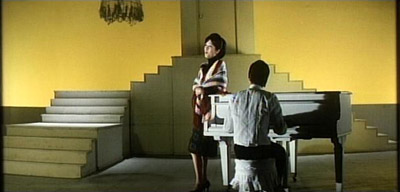
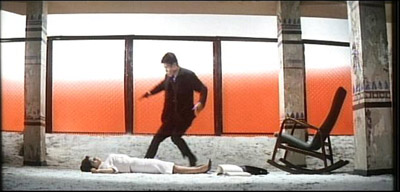
One hears this film got director Seijun Suzuki's carreer into trouble, and it's not hard to see why. The studio were probably hoping for just another film about a yakuza killer; what they got was something in a style somewhere between experiment and insanity. The film has lots of nice little ideas, but in my view, sometimes Suzuki is directing too much (instead of going for the simple solution), there is too little narrative glue to hold the whole thing together and it feels chopped up. Recommended for fans of David Lynch. (6.5)

1960: Inherit the Wind

It is hard to stay neutral when telling the story of an actual historical case in which a science teacher in the USA's bible belt was sued for teaching evolution, and this film clearly, and perhaps a bit to forcefully, makes clear that it's not on the side of the religious zealots. Otherwise, this is a well-structured and all-around professionally done piece of political entertainment. (6.5)

1969: Model Shop

The loose sequel to Lola has the kind of screenplay that won't get you any love in screenwriting class: A day in the life of George, who has to deal with his girlfriend nagging about his lack of ambition, the worry of being drafted into Vietnam and the company who want to repossess his car, so George drives around town trying to raise a hundred dollars and meets Lola, who now works in a "model shop", where people can take their own pin-up photos. This one is going to make some people fall asleep, but I liked the excellent cinematography, the film's time-capsule quality and its general feel. One of the rare sequels (if it is a sequel) that I liked better than the original. (7)

29/07/2010

1929: Blackmail (Sound Version)

Hitchcock's first talkie, about a homicide detective who investigates a murder he knows his girlfriend has commited and the man that blackmails them, is awkwardly structured and glacially paced, yet I found it reasonably entertaining. (6)

1962: Knife in the Water

A married couple invite a hitchhiker to join them for a weekend sailing trip. He has a personality problem and a knife. - Good screenplay, good direction, good all around. (7)

28/07/2010

1961: Lola

Various people live in a French seaside town. Good cinematography, but too much talking. (6)

1961: Victim

The conventional and quick-moving crime drama, dealing with London homosexuals being blackmailed (homosexual behaviour still being illegal in Britain at the time), predictably suffers from anti-anti-gay soapboxing, but is otherwise a solidly done film. (6.5)

27/07/2010

2002: Femme Fatale

A heist and its aftermath have repurcussions when their protagonists meet again in Paris 7 years later and everybody's looking for revenge. This no-punches-pulled, wham-bam-bam, in-yo-face film is another quality piece of work from the underrated Brian de Palma, mainstream auteur. (7.5)

1961: The Day the Earth Caught Fire

A London reporter with personal problems is our main man and witness as the simultaneous tests of nuclear bombs by the Americans (at the South Pole) and the Russians (at the North Pole) causes the earth to shift on its axis, which brings about extreme weather changes that are depicted in a refreshingly un-Emmerichian style. Solid work. (6.5)

26/07/2010

1960: Village of the Damned

In an English village, a number of children are born who have apparently been begat by aliens and who are blond, precocious and eerily powerful in this crisp, entertaining and totally nonscary old horror/sf film. (7)

25/07/2010

1961: Viridiana

This critics' favourite, directed by Buñuel, about the young, kind and beautiful Viridiana's fateful last visit to her uncle and its aftermath, leaves me cold - there's nothing wrong with it, but there's not much right with it either. (5.5)

24/07/2010

1966: Tôkyô nagaremono (Tokyo Drifter)

Tetsu has decided to leave his yakuza gang and sworn off violence, but naturally, the past won't leave him be, so you can expect lots of shooting in this fun violence movie. Apparently, this was director Seijun Suzuki's first film in colour, and as such is remindful of pop songs from the 1960s, when stereo had just become available: Let's put one half of the instruments on the left and the other on the right, because we can! Likewise, once given access to colour, Suzuki gave the audience frames like this. Which, I think, is great. Although pistols, not swords, are used, this looks like the film that Tarantino tried to make when he did Kill Bill. The original is to be preferred. (7)

23/07/2010

1969: Bob & Carol & Ted & Alice

Bob & Carol go on a weekend seminar about self-actualization, or whatever you want to call it, and swallow the stuff hook, line and sinker, returning to tell their friends Ted & Alice, another wealthy couple that they want to know about their honest feelings. Within five minutes, Carol also goes on record saying that nobody should ever do anything to make other people feel degraded, so you can see a tension there; and if I had written the screenplay, within fifteen minutes there would have been violence, nuclear weapons and all. The actual film, perhaps to its credit, stays more ambivalent, though. Not a great movie, but certainly interesting, and very 1969. (6.5)

22/07/2010

2007: Before the Devil Knows You're Dead

Although it's been a while since Pulp Fiction hit the screens (let alone the first printing of Tristram Shandy), nonlinear storytelling is still considered all the rage in contemporary Hollywood. There's nothing wrong with it per se, but when it is employed mainly as a gimmick, as in this thriller-drama about a robbery that goes all pear-shaped, the nonlinear fashion is a little annoying. Also, one wonders why an accomplished director like Sidney Lumet - with Dog Day Afternoon, perhaps the classic in the robbery-gone-pear-shaped genre, to his name - tries so hard to make this film look modern, making it look run-of-the-mill in the process, is a bit baffling. None of which is to say that this movie is as badly done as the previous sentence. (6)

21/07/2010

1968: Night of the Living Dead

George A. Romero's template for pretty much all zombie films to follow it is visibly cheap, but not all that trashy and reasonably diverting, but no more. (6)

20/07/2010

1942: Listen to Britain

Mashup of sounds and moving pictures recorded in wartime Britain. Meant as uplifting in a patriotic way and considered a classic, but strikes me as pointless. (3.5)

19/07/2010

1943: Meshes of the Afternoon

Mirrors, knives, waves - this experimental short has the whole psychoanalytic mumbo-jumbo. It's easy to see how someone could call this "meaningless experimental crap", but I quite like its Latin feel - the grainy b/w recording of the sunlight -, the music (not that I'd buy it on CD) and the crude surrealism. (7)

18/07/2010

1969: Le clan des Siciliens (The Sicilian Clan)

Jean Gabin! Lino Ventura! Numerous mentions of Quai des Orfevres! Modern interior architecture! Occasional female nudity! Questionable police investigation methods! Plot holes! Narrow ties! In short, it has everything a French crime film is supposed to have. (7.5)

17/07/2010

1975: Love and Death

Woody Allen's very silly film about a Russian torn between war and females' loins, which plays endlessly on his betaness and is really very silly indeed, is by far the funniest of his films I've seen. That is all. (7.5)

14/07/2010

1928: Spione (Spies) (Friedrich-Wilhelm-Murnau-Stiftung Restoration)

Lang's film about the state fighting a criminal mastermind that's not called Mabuse is a tad unfocused and long, yet overall a decent bit of entertainment. First appearance of a stache-twirling villain that I'm aware of. (6)

13/07/2010

1939: Ninotchka

Beautiful but stern Russian special envoy "Ninotchka" Yakushova (Greta Garbo), while in Paris on an official mission, falls into the hands of a playboy, who, um, makes her a woman. If you can deal with this plot, it's a charming old black-and-white comedy for rainy afternoons. Garbo, by the way, laughs! (7)

11/07/2010

1928: Oktyabr (Ten Days That Shook the World)

The Eisenstein film about the Russian Revolution, which I saw in a GDR version with German intertitles, Shostakovich's music and added sound effects, is interesting in that a certain interpretation of history affects the way the story is told at a very basic level: Unusually, here are practically no individual characters of relevance, which makes sense if you believe that there is no such thing as individuals, only classes with interests that fight each other. The film suffers from this, but makes up for it by being visually excellent. (7.5)

05/07/2010

1999: The Limey

This variant of the man seeks revenge story suffers from a bad case of The "Blimey Mate" Problem, complete with Cockney Rhyming Slang; indeed it's a pretty unsophisticated script all around. Director Steven Soderbergh perhaps should have gotten an Oscar for making it into a visually interesting, reasonably entertaining film. (6.5)

04/07/2010

1964: Seance on a Wet Afternoon

The film about professional psychic talking her beta husband into kidnapping so they don't have to be middle class anymore and then offering her services as a medium to the kidnappee's parents suffers a little from a heavy-handed exposition but is otherwise good all around. (7)

03/07/2010

1968: The Producers

In order to defraud investors, a Broadway producer and his accountant devise a scheme to produce a flop. They think they've found the right script when they come across Springtime for Hitler, but of course it turns out to be a huge success. - Much too slapsticky for my taste, but even so, the tightly scripted movie provides reasonably good entertainment. (6.5)

01/07/2010

1969: L'armée des ombres (Army of Shadows)


When Inglourious Basterds came out, some people complained that it was not what they had expected from a film advertised as depicting the work of freedom fighters behind enemy lines: No training scenes, no raids on barracks, wtf? It is possible that Tarantino's deviations from the genre standards were inspired by L'armée des ombres, Jean-Pierre Melville's 1969 flop about the French resistance. Thinking back to the plot, it seems a strange movie indeed: Never do we see the freedom fighters take any effective action against the Germans, and one comes away from the film with the feeling that had the resistance never existed, this would not have made much of a difference. Instead, what is chronicled are the internal workings of the group; much time is given to the killing of resistance members who gave away the names of comrades. 145 minutes long, it is deliberately paced (many people will find this movie boring), and its subdued mood is underlined by Pierre L'Homme's excellent, excellent cinematography, which might best be described as a technicolor version of the work Robert Elswit did for Michael Clayton, and which nicely contrasts with Eric de Marsan's very good, somewhat saccharine music. A minor masterpiece which teaches the lesson that even if you're fighting on the side of the good guys, you may end up doing ugly things. (8)

The Best of June 2010

  1. Vivre sa vie: Film en douze tableaux (1962) - 7.5
  2. Kumonosu-jô (1957) - 7
  3. Alphaville, une étrange aventure de Lemmy Caution (1965) - 7

Films Not Finished June 2010

If...., Themroc

30/06/2010

1965: Alphaville, une étrange aventure de Lemmy Caution

Godard's take on the Lemmy Caution character is a science fiction film in which the agent comes to Alphaville, the place where logic rules. Lemmy meets a woman, and you can guess the rest. Though a lot is made of the fact that Godard didn't build any sets but rather filmed the most modern-looking parts of Paris he could find, but given that the film is set in the mid-1970s (if I interpret the dialogue correctly), this seems fair enough. The film's not a masterpiece by any stretch, but charmingly quaint. Recommended for fans of b/w shadow-/lightplay. (7)

29/06/2010

1954: Thursday's Children

Not only is Lindsay Anderson's documentary about a school for deaf children boring, it also has voice-over narration that alternates between the usual third-person view and taking the (inauthentic) voice of the children ("We are deaf."). Bonus: Contains the remarkable assertion that if you don't have words, you cannot think. (4)

28/06/2010

1935: Mutiny on the Bounty

Solid but unexceptional narration of the well-known story. I've previously seen the 1962 version with Marlon Brando, and filming the South Seas in black and white somehow seems wrong. (6)

27/06/2010

1960: Charlotte et son Jules

Upon the return of his ex-girlfriend into his flat, a young man starts a ten-minute monologue until the film comes to a predictable "surprise" ending. Pointless twelve-minute early Godard. (4)

26/06/2010

1962: Vivre sa vie: Film en douze tableaux (My Life to Live)

Nana, who can't make it in film despite having featured in an Eddie Constantine picture (injoke!), is short of money, and we witness her quick descent into prostitution and worse, driven by Michel Legrand's memorable theme music. Godard's unusual use of the camera both in terms of movement and framing, remindful of La passion de Jeanne d'Arc (which we see Nana watching), is the main feature that sets this film apart, although for my taste in one scene it is woefully overdone. (7.5)

25/06/2010

1959: Charlotte et Véronique, ou Tous les garçons s'appellent Patrick (All the Boys Are Called Patrick)

Godard shot this short a in the year before he did À bout de souffle, but, working from a script by Eric Rohmer, he naturally couldn't produce anything resembling a masterpiece. The story features a couple of female flatmates who go out one day to be chatted up seperately by the same guy, tell about it each other in the evenings, and guess what happens at the end. Exactly the same story, with genders reversed, was made into the excrutiating rap song "Die da" by Die Fantastischen Vier about forty years later, the lyrics having the decisive advantage that it's unclear until the end that the two friends are talking about the same person. Well. (5)

14/06/2010

2009: Surrogates

The Bruce Willis flick about a future in which people mind-control human-looking robots that they send out into the streets so they (the humans) can safely stay at home is professionally done all around, but no Blade Runner (6.5).

06/06/2010

1954: Viaggio in Italia

Strange: Throughout the film I kept thinking that the mediterranean light had been captured better in the films of Antonioni's ennui trilogy. Apart from that, competent film about a couple bitching at each other during a trip to Italy. Has Ingrid Bergman in it. (6.5)

05/06/2010

1919: Broken Blossoms or, The Yellow Man and the Girl

Girl suffers under the thumb of her adoptive father who suffers from bad English ("I'll teach yer!") and anger management issues ("I'll teach yer!"). Girl falls in love with gentle Chinaman (played by a pretty Caucasian-looking Richard Barthelmess). Violence. - There's not a lot to say about D.W. Griffith's acclaimed silent melodrama except that it's not very good. (5.5)

04/06/2010

1948: Germania anno zero (Germany, Year Zero)

Rosselini's neorealist classic about a boy in bombed-to-pieces postwar Berlin features lay performances from lay actors and more technical ineptness than you should expect from a 1948 picture. Historically important it may be, particularly good it's not. (5.5) Better films in the same mould are Ladri di biciclette and Rosselini's own Roma, città aperta.

1957: Kumonosu-jô (Throne of Blood)

Kurosawa's idea behind his version of Macbeth, the overriding aesthetic principle of which is scarceness, seems to be to make Ozu look like Busby Berkeley. (7) Just the right thing to watch after Sex and the City 2, and I've also got four Rosselinis lined up.

01/06/2010

31/05/2010

2010: Sex and the City 2

I understand every bit of criticism in Roger Ebert's one-star review, but I can't say I hated the film. Yes, we made fun of it and it's certainly no Some Like It Hot, but at times I laughed with the movie and, never having seen an episode of Sex and the City, found it an interesting sociocultural experience overall. (unrated)

2009: Angels & Demons

With its high production values and general wham-bam-bam-ness, the film version of Dan Brown's thriller, about the hunt for kidnapped bishops in Rome, could be more fun if the viewer had to expand less energy on suspending disbelief. (6.5)

2009: Män som hatar kvinnor (Men Who Hate Women or The Girl with the Dragon Tattoo)

Like the Stig Larsson runaway bestseller it is based on, the film takes its time, clocking in at about 150 minutes, though this is by no means to its detriment. Good work all around. (7)

30/05/2010

1998: Enemy of the State

The plot is a man on the run, the target audience is the not-too-bright, and it has a political message, too: this film has a lot going against it. (5)